Thinking / Essay
The Human Premium
What becomes valuable when intelligence becomes abundant?
I have become less interested in whether AI is creative.
It is one of those questions that can absorb a tremendous amount of energy without changing very much. If a machine produces something beautiful, useful or surprising, people can spend the afternoon debating whether it really understood what it was doing. Meanwhile someone has already put the thing in an ad.
The more consequential change is much more mundane.
Making things has become easier. A first draft used to require a first draft. A visual direction required somebody to make it. Exploring ten strategic territories meant a team spending time on ten strategic territories. Code had to be written. Research had to be found and read. Mediocre work was expensive too. A lot of that friction has disappeared.
This is obviously useful. I use AI because it lets me cover more ground, ask more questions and get somewhere interesting faster. But it also changes what I find impressive.
Looking finished is cheap
AI is exceptionally good at producing things that look as though somebody has already thought about them. This can be dangerous.
A weak argument wrapped in an elegant structure is harder to spot than a weak argument scribbled badly on a piece of paper. A confident answer can disguise the fact that the underlying question was stupid. A plausible strategy can survive surprisingly long if nobody stops to ask whether a company could actually do any of it.
The old production constraints accidentally provided some quality control. If making something cost three days, somebody was likely to ask whether those three days were worth spending.
Now you can make twenty versions before lunch. Great.
Now the next question is which one do you want.
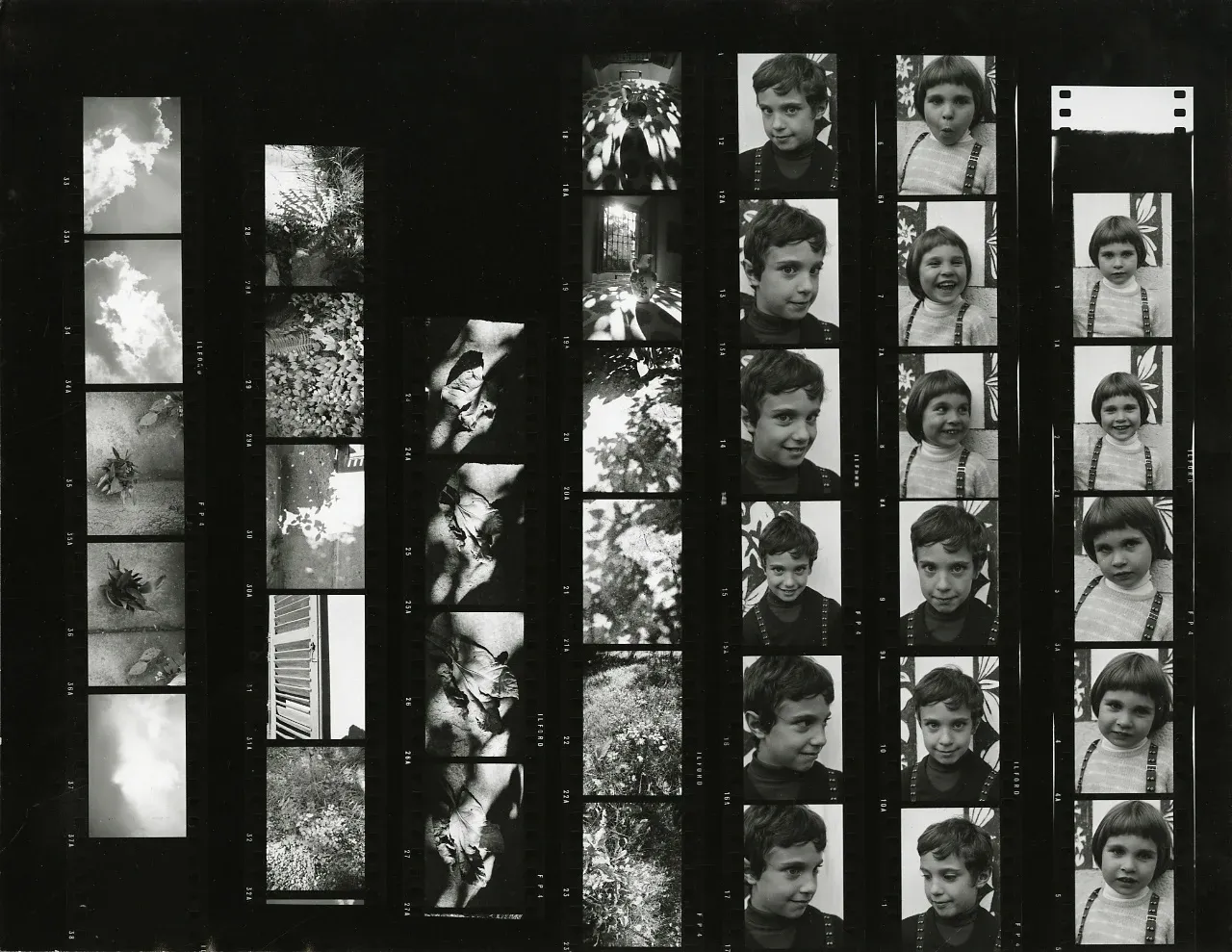
A contact sheet. Dozens of frames, of which a few get used. Photographers have always made more than they need. The work is in the choosing. Photo: Paolo Monti, Livigno 1975. BEIC, CC BY-SA 4.0.
That is where things become interesting. When one input to a piece of work becomes abundant, the price of that work tends to collect around whatever stays scarce. In strategy, branding and most forms of professional judgment, the scarce input is the decision, along with the person prepared to be accountable for it. The value around that decision is the Human Premium.
I do not mean a mystical property possessed by people and denied to machines. Humans produce enormous quantities of terrible judgment every day. We are also quite capable of bad taste, misplaced confidence and decisions that should have been delegated to a spreadsheet years ago.
The human premium comes from being able to understand the situation well enough to make a consequential choice.
Taste is not a moodboard
Taste gets talked about a lot in creative work, usually as though it were a slightly more sophisticated word for liking nice things.
I think of it more as discrimination.
Two ideas can both be good and only one can be right.
- A sentence can be well written and completely wrong for the person saying it.
- A brand can be distinctive and commercially useless.
- An image can be beautiful and make the whole thing feel cheap.
You only get to those judgments by understanding context.
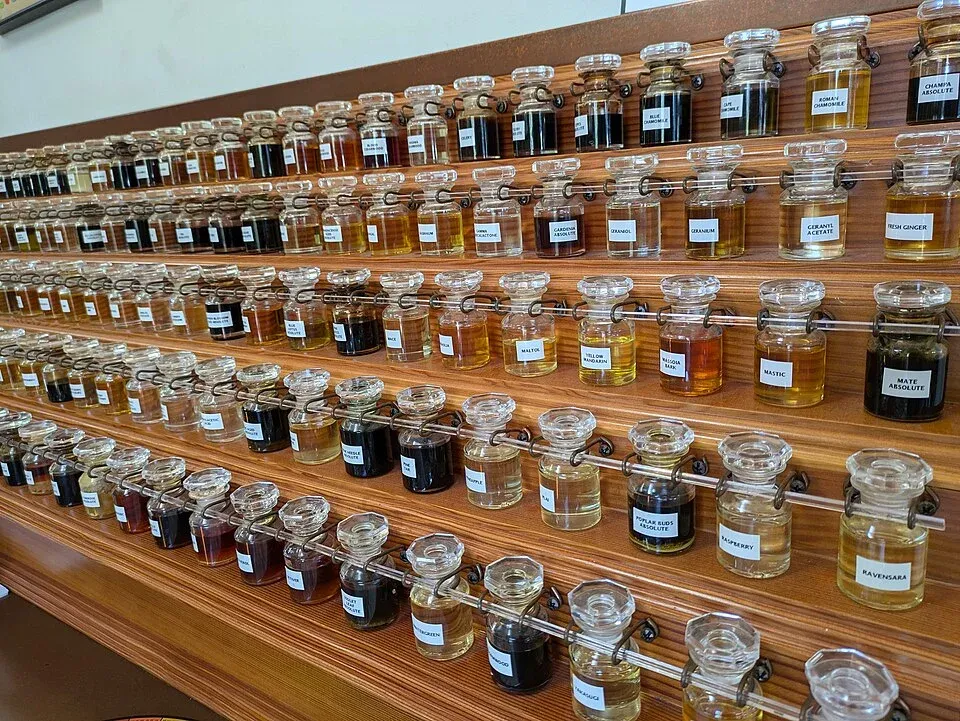
A perfumer’s organ. Every ingredient on it is good on its own. The skill is knowing which ones belong together, and leaving the rest on the shelf.
This is where experience becomes annoyingly difficult to compress. Much of professional expertise consists of patterns you have encountered often enough that something starts bothering you before you can fully explain why.
You can eventually explain it. Usually. That intermediate feeling matters. A model can give me twenty plausible answers. Sometimes the useful human contribution is recognising that answer seventeen contains something none of the others do. Sometimes it is deleting all twenty.
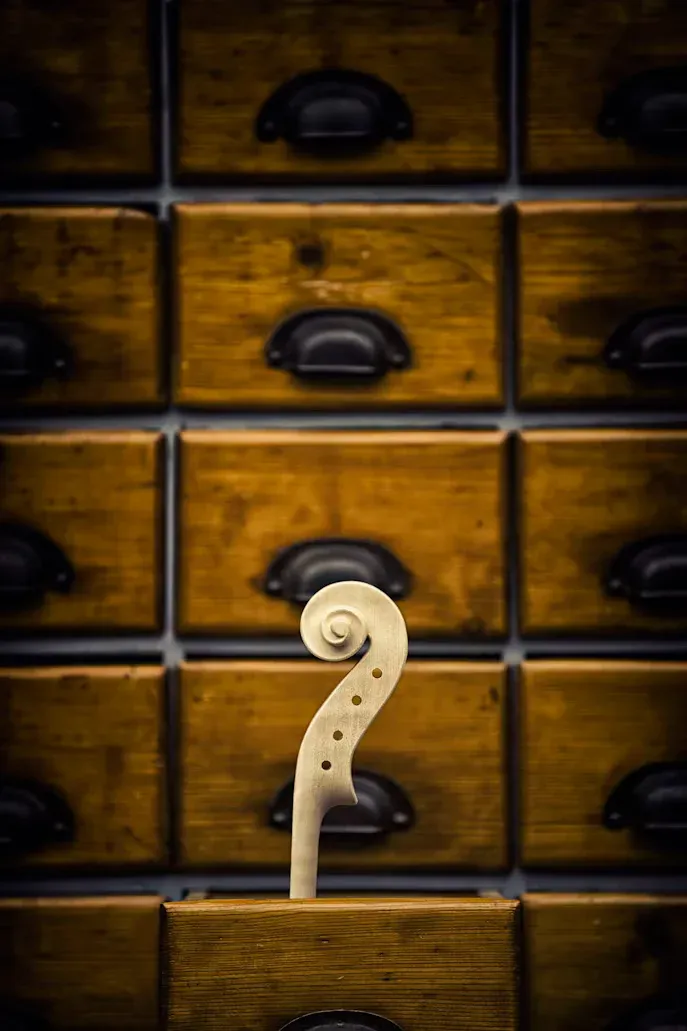
A luthier’s workshop. Every dimension of a violin can be specified. Whether it sounds right is still decided by an ear that has heard enough instruments to know.
Responsibility is underrated
There is another part of this that interests me more as AI becomes embedded in actual organisations. Someone still has to own the decision.
This sounds bureaucratic until something goes wrong.
A company can automate analysis, drafting, design, customer service or parts of decision-making. At some point, somebody has to be prepared to say: yes, this is the recommendation we are following. Yes, we are putting this in front of customers. Yes, this represents us.
Responsibility creates a different relationship with quality. It is easy to ask for more options when nobody has to choose between them. It is easy to generate provocative ideas when nobody has to explain one to the CEO on Monday morning.
Trust matters even more.
When synthetic content becomes commonplace, provenance starts carrying information of its own. Who made this? Why should I believe it? Who stands behind the decision? What happens when something goes wrong?
The economics of abundance make those questions more valuable.
You can already see companies taking very different positions on this. Some embrace synthetic production everywhere they can. Others make human authorship, craft and provenance part of their proposition. Both can be rational strategies. The interesting question is what their customers will come to value once synthetic production becomes ordinary.
This is also why I keep returning to Nike.
Nike’s great brand machine was built through relationships, instincts, cultural knowledge and accumulated experience that were difficult to quantify neatly. When companies optimise only what can be measured directly, they can accidentally strip away some of the intangible things creating future demand.
AI makes that temptation stronger because it makes so many outputs measurable, repeatable and optimisable.
Yet brands are partly built from things that resist optimisation.
Surprise. Cultural intuition. Distinctive choices. Conviction. The willingness to make something that cannot yet be justified by last quarter’s data.
None of this makes AI less valuable. It makes human contribution more specific.
The economics will sort some of this out
A lot of creative and knowledge work will simply become cheaper. That is fine.
Nobody mourns the fact that spreadsheets made arithmetic faster. Very few people want to return to typesetting their own business presentations because PowerPoint destroyed some noble craft.
AI will remove work that did not deserve to remain expensive. It will also reveal where we were charging for production when the real value was somewhere else.
Strategy is one example. If the value of strategy consists mainly of producing a polished deck, the outlook is poor. If the value lies in noticing what matters, asking an uncomfortable question, understanding why an organisation keeps getting the same decision wrong, seeing an opportunity before it has an established category, or committing to one direction when fifteen look defensible, there is more to work with.
The same applies to creative work. The machine can make an image. The more interesting question is why this image, now, for these people.
That question contains economics, culture, timing, judgment and occasionally a bit of courage.
The Human Premium is the ability to decide what is worth doing in the first place. That remains worth paying a human for.