Thinking / Essay
What makes a future desirable?
Technical possibility is only half the work.
We talk about the future as if it arrives because technology advances.
Someone invents a better battery, a new protein, an autonomous vehicle or an artificial intelligence system. The technology improves. Costs fall. Adoption follows.
Reality is messier.
People have to want the future being offered to them.
A technically superior possibility can fail to spread because it feels threatening, ugly, unfamiliar, socially undesirable or simply irrelevant to the way people see themselves.
Another future can become powerful because people recognise something desirable in it before every practical question has been solved.
This is why I keep returning to a question:
What makes a future desirable?
Part of the answer is story.
A technology describes what is possible.
A story lets people imagine what that possibility means for their lives.
Consider alternative proteins.
“Microbial fermentation using carbon dioxide and renewable electricity” is an extraordinary technological idea.
“Taste the future” creates a different kind of understanding.
One describes a process. The other places a person inside a possible world.
The same principle operates at much larger scales.
Countries build futures through culture as much as infrastructure.
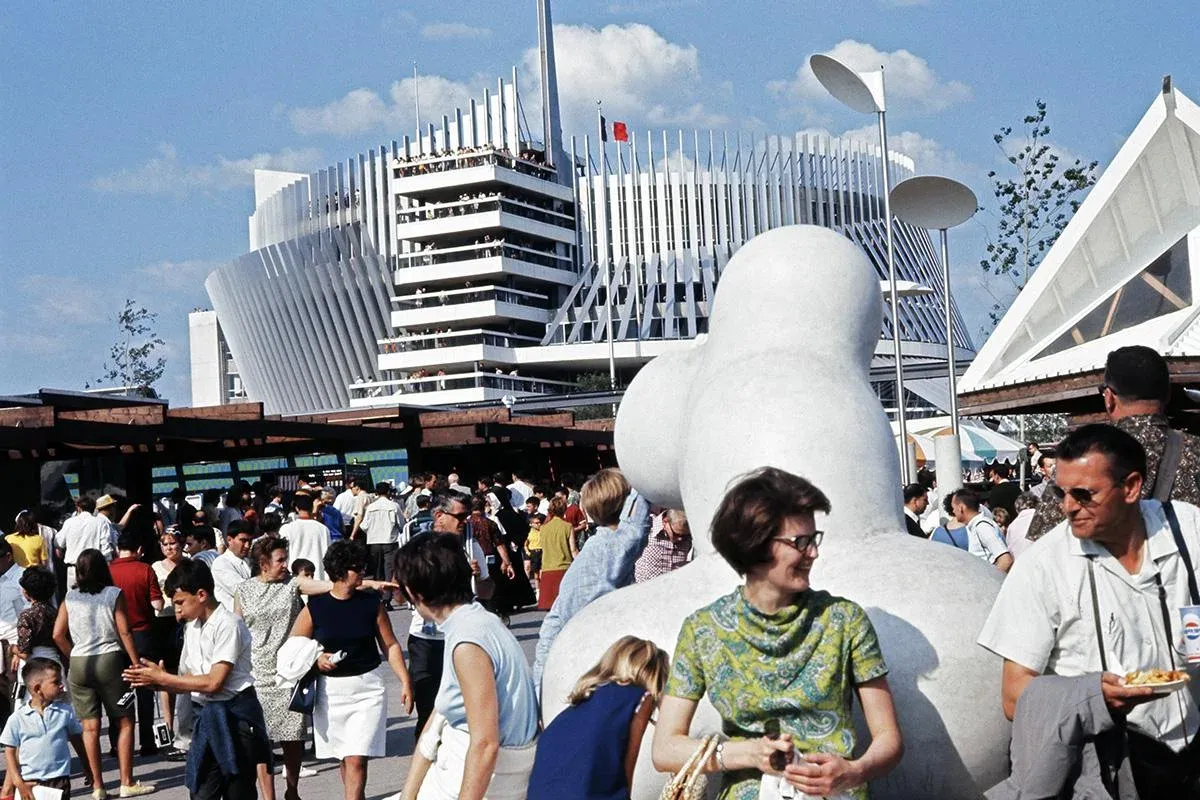
Expo 67 presented architecture, technology, transport and new ways of living as an immersive vision of progress. Millions of visitors could move through that proposed future themselves, which helped turn technological possibility into a cultural experience people could imagine participating in.
China can become dominant in electric vehicles, batteries, drones and advanced manufacturing. Industrial leadership creates capability and economic power. Cultural power emerges through a different mechanism.
People begin to imitate, consume, admire and participate.
Japan offers an obvious historical example. Electronics and cars helped create respect for Japanese industrial capability. Design, fashion, food, games, architecture, cinema and popular culture created something broader: a world people wanted to enter.
The distinction matters for companies too.
A sustainable future framed entirely around sacrifice will compete poorly with one that promises a better experience.
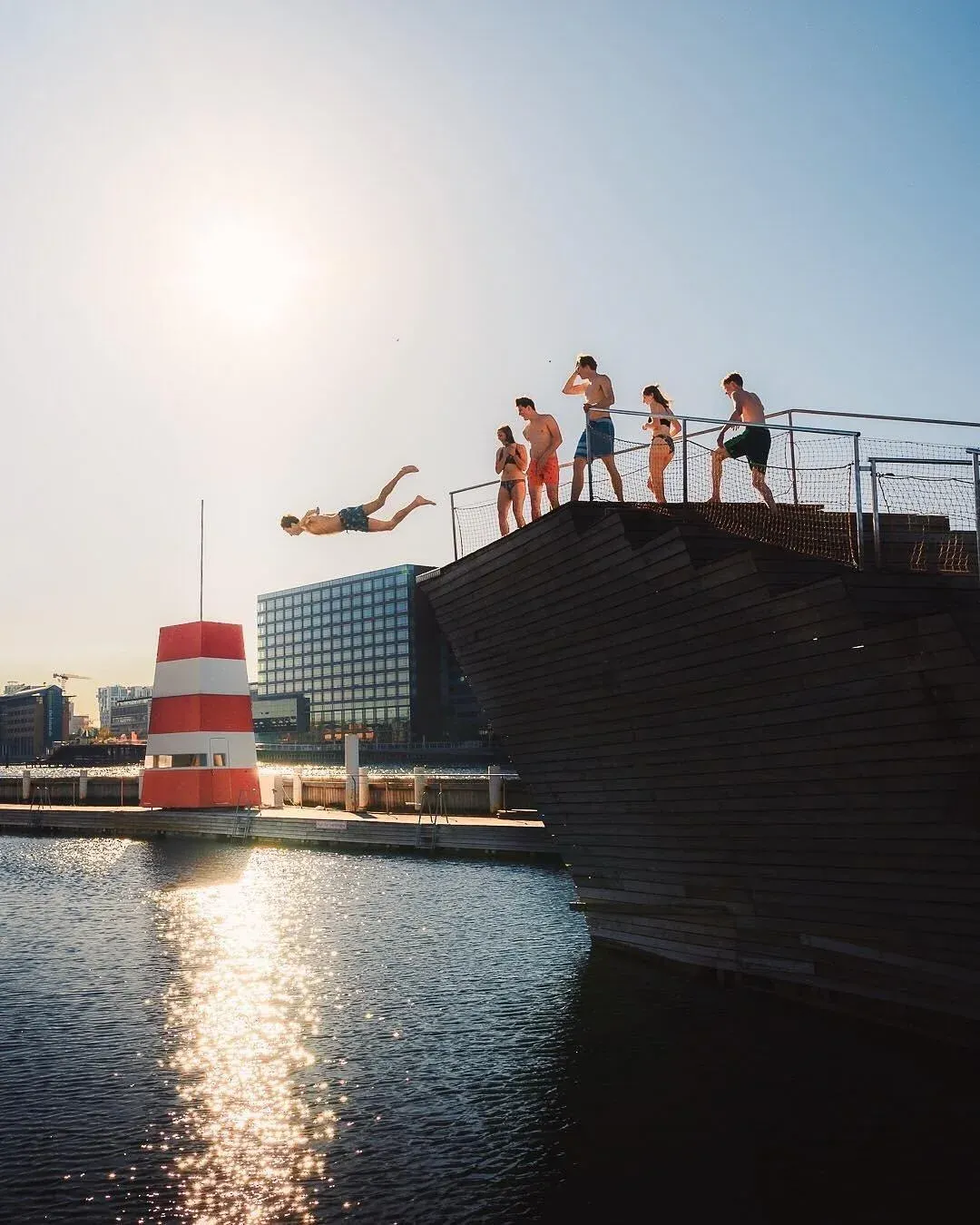
Copenhagen’s harbour baths are the visible outcome of decades of work on water quality, infrastructure and urban planning. The result is more powerful than an environmental target on paper: a former working harbour becomes somewhere people actively choose to swim, meet and spend a summer evening.
An autonomous product framed entirely around efficiency will feel different from one that gives people time and attention back.
A circular industrial system becomes more compelling when materials staying in circulation feels like progress rather than obligation.
Desirability also requires agency.
People resist futures that seem to happen to them.
They are more open to futures in which they can understand their role.
This was one of the interesting ideas inside the Bayer employee experience work I did years ago. Organisational change can be announced from above, but behaviour changes when people can see a meaningful choice for themselves.
The same applies to much larger transitions.
Climate technology, AI, automation, new food systems and changing cities all create anxiety partly because they redistribute agency.
Who decides?
Who benefits?
What happens to me?
A credible future needs answers.
There is also an aesthetic dimension that strategy sometimes ignores.
Futures have a look and feel.
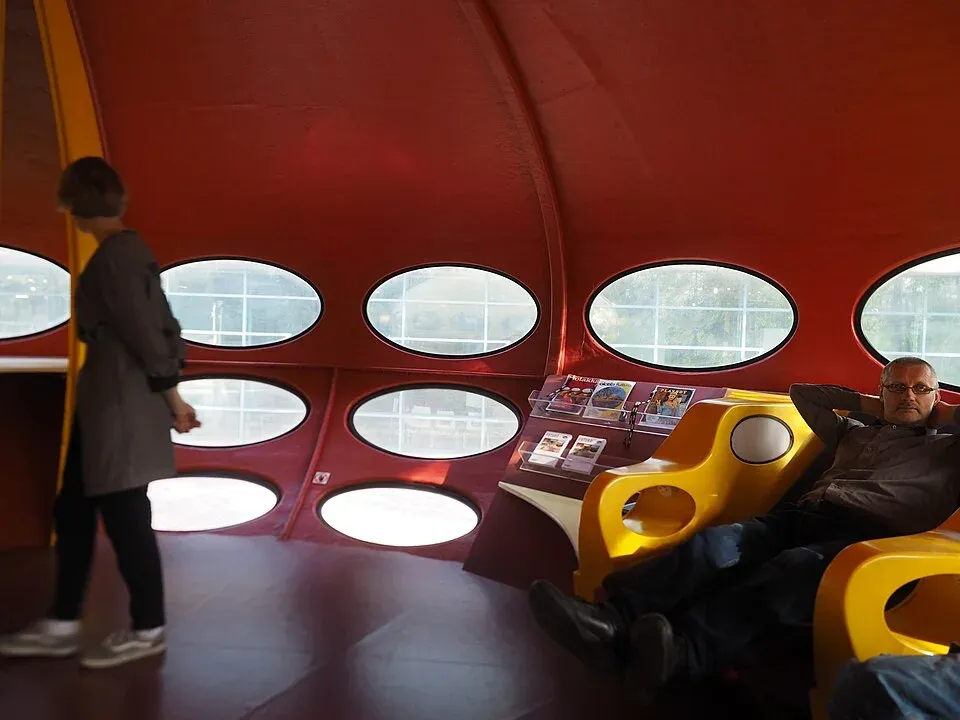
Matti Suuronen’s Futuro house, designed in 1968, translated a particular vision of the future into a compact prefabricated home with curved walls, moulded furniture and a spacecraft-like form. It shows how ideas about progress become more persuasive when they are given a physical shape people can imagine living inside.
The twentieth century knew this instinctively. Space travel, modernist architecture, streamlined transport and consumer electronics all created visual languages for progress.
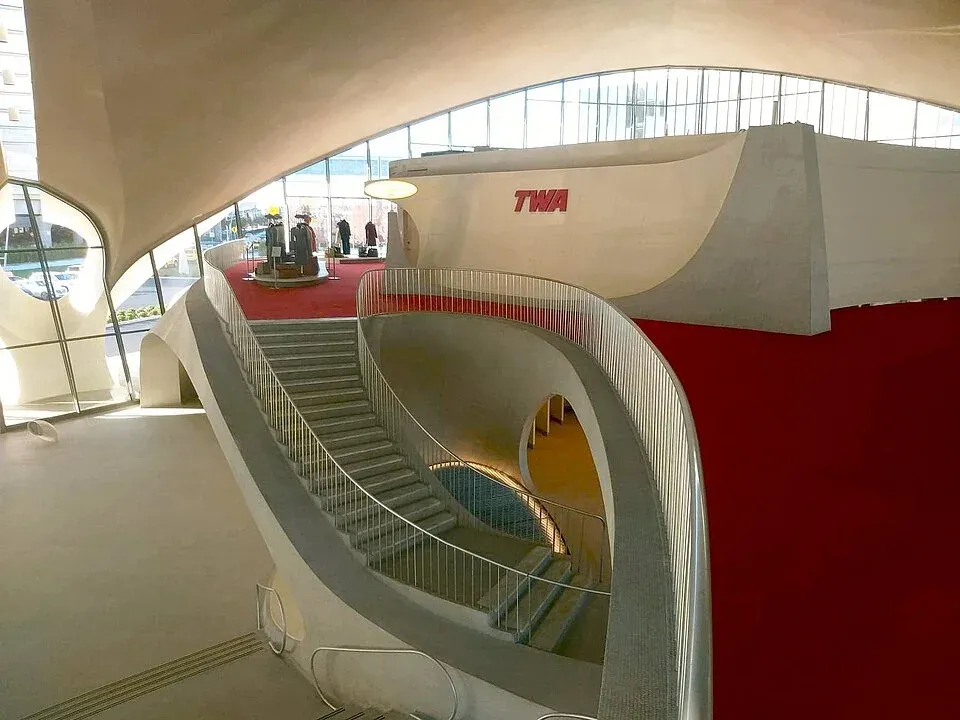
Eero Saarinen’s TWA Flight Center, opened in 1962, turned the emerging jet age into architecture. Its sweeping concrete forms, vast windows and flowing interiors made air travel feel glamorous, modern and emotionally charged, giving technological progress a form people could see, enter and remember.
Many contemporary futures arrive as policy documents.
Net zero.
Digital transformation.
Industry 4.0.
Artificial intelligence adoption.
The language may be accurate. It rarely makes anyone dream.
I think brands have a role here that is larger than communications.
Brands can make emerging systems legible, culturally meaningful and emotionally imaginable.
That matters because industrial transitions are ultimately social transitions.
Technology creates possibility.
Economics determines whether it can scale.
Institutions determine what is allowed.
Culture helps determine whether people want it.
A future becomes powerful when those forces begin reinforcing one another.
So whenever someone presents a vision of the future, I increasingly ask two questions.
Can this happen?
And then the more interesting one:
Who would want to live there?
That second question is where strategy, brand and culture begin.